Being Human 2012

The Science of Human Experience

Palace of Fine Arts / San Francisco, CA March 24, 2012 9am - 5:30pm

Speakers

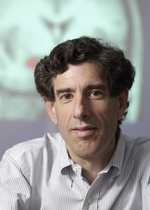
Richard J. Davidson, Ph.D.

Richard J. Davidson, Ph.D.

Founder and Chair, Center for Investigating Healthy Minds, Waisman Center, University of Wisconsin-Madison

Richard J. Davidson is the William James and Vilas Research Professor of Psychology and Psychiatry, Director of the Waisman Laboratory for Brain Imaging and Behavior and the Laboratory for Affective Neuroscience, Founder and Chair and the Center for Investigating Healthy Minds, Waisman Center at the University of Wisconsin-Madison.

Richard J. Davidson is the William James and Vilas Research Professor of Psychology and Psychiatry, Director of the Waisman Laboratory for Brain Imaging and Behavior and the Laboratory for Affective Neuroscience, Founder and Chair and the Center for Investigating Healthy Minds, Waisman Center at the University of Wisconsin-Madison. He received his Ph.D. from Harvard University in Psychology and has been at Wisconsin since 1984.

He has published more than 275 articles, many chapters and reviews and edited 13 books. He has been a member of the Mind and Life Institute’s Board of Directors since 1991. He is the recipient of numerous awards for his research including a National Institute of Mental Health Research Scientist Award, a MERIT Award from NIMH, an Established Investigator Award from the National Alliance for Research in Schizophrenia and Affective Disorders (NARSAD), a Distinguished Investigator Award from NARSAD, the William James Fellow Award from the American Psychological Society, and the Hilldale Award from the University of Wisconsin-Madison.

He was the Founding Co-Editor of the new American Psychological Association journal EMOTION and is Past-President of the Society for Research in Psychopathology and of the Society for Psychophysiological Research. He was the year 2000 recipient of the most distinguished award for science given by the American Psychological Association –the Distinguished Scientific Contribution Award. In 2003 he was elected to the American Academy of Arts and Sciences and in 2004 he was elected to the Wisconsin Academy of Sciences, Arts and Letters.

He was named one of the 100 most influential people in the world by Time Magazine in 2006. In 2006 he was also awarded the first Mani Bhaumik Award by UCLA for advancing the understanding of the brain and conscious mind in healing. Madison Magazine named him Person of the Year in 2007. In 2011, he was given the Paul D. MacLean Award for Outstanding Neuroscience Research in Psychosomatic Medicine. He serves on the Scientific Advisory Board at the Max Planck Institute for Human Cognitive and Brain Sciences in Leipzig from 2011-2017 and as Chair of the Psychology section of the American Association for the Advancement of Science from 2011-2013. His forthcoming book (with Sharon Begley) The Emotional Life of Your Brain will be published by Penquin in 2012.
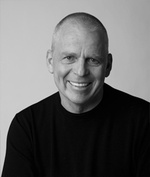
Peter Baumann

Peter Baumann

Author and Founder, The Baumann Foundation

Peter Baumann was born in 1953 in Berlin, Germany. After joining the musical group Tangerine Dream in 1971, he toured with the band worldwide and recorded multiple Gold records until 1981. Mr. Baumann moved to New York in 1982 and founded the record company, Private Music. He served as CEO of Private Music until 1994 when the company was sold ...

Peter Baumann was born in 1953 in Berlin, Germany. After joining the musical group Tangerine Dream in 1971, he toured with the band worldwide and recorded multiple Gold records until 1981. Mr. Baumann moved to New York in 1982 and founded the record company, Private Music. He served as CEO of Private Music until 1994 when the company was sold to RCA.

For many years, Mr. Baumann has focused on the exploration of well-being and quality of life from a philosophical, conceptual and experiential perspective. He is a Fellow at the Mind & Life Institute and serves on the board of California Institute for Integral Studies.

He founded The Baumann Foundation, the San Francisco-based think-tank that explores the experience of being human in the context of cognitive science, evolutionary theory and philosophy to foster greater clarity about the human condition. The foundation is focused on the exploration of subjects such as perception, cognitive biases, mental representation, mindfulness, attention, dynamics of self-identification and how these relate to and inform conscious experience. 


On March 24th, 2012, The Baumann Foundation will host the first annual Being Human Symposium - Being Human 2012: Science, Philosophy and Your Life - at the Palace of Fine Arts in San Francisco, where leading scientists and philosophers will present scientific and philosophical insights that are reshaping our understanding of human nature and explore how they can effect our experience of daily life.

Baumann is author (with Michael Taft) of Ego: The Fall of the Twin Towers and the Rise of an Enlightened Humanity (2011).

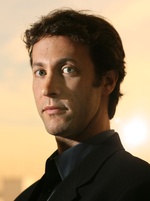
David Eagleman, Ph.D.

David Eagleman, Ph.D.

Neuroscientist, Professor of Neuroscience and Psychiatry, Baylor College of Medicine

David Eagleman is a neuroscientist, New York Times best selling author and Guggenheim Fellow who holds joint appointments in the Departments of Neuroscience and Psychiatry at Baylor College of Medicine in Houston, Texas. Dr. Eagleman’s areas of research include time perception, vision, synesthesia, and the intersection of neuroscience with the legal system. 

David Eagleman is a neuroscientist, New York Times best selling author and Guggenheim Fellow who holds joint appointments in the Departments of Neuroscience and Psychiatry at Baylor College of Medicine in Houston, Texas. Dr. Eagleman’s areas of research include time perception, vision, synesthesia, and the intersection of neuroscience with the legal system. 

He directs the Laboratory for Perception and Action, and is the Founder and Director of Baylor College of Medicine’s Initiative on Neuroscience and Law. He has written several neuroscience books, including Incognito: The Secret Lives of the Brain (Pantheon, 2011), Wednesday is Indigo Blue: Discovering the Brain of Synesthesia (co-authored with Richard Cytowic, MIT Press), and the upcoming Live-Wired: How the Brain Rewrites its own Circuitry (Oxford University Press, 2012).

He has also written an internationally bestselling book of literary fiction, Sum, which has been translated into 22 languages and was named a Best Book of the Year by Barnes and Noble, New Scientist and the Chicago Tribune. He has written for The Atlantic, The New York Times, Discover Magazine, Slate, Wired and New Scientist, appears regularly on National Public Radio and BBC to discuss both science and literature, and has been profiled in the New Yorker.

Paul Ekman, Ph.D.

Paul Ekman, Ph.D.

Manager, Paul Ekman Group, LLC

Paul Ekman's research on facial expression and body movement began in 1954, as the subject of his Master’s thesis in 1955 and his first publication in 1957. In his early work, his approach to nonverbal behavior showed his training in personality. Over the next decade, a social psychological and cross-cultural emphasis characterized his work, with a growing interest in an evolutionary and semiotic frame of reference. In addition to his basic research on emotion and its expression, he has, for the last thirty years, also been studying deceit.

Paul Ekman was an undergraduate at the University of Chicago and New York University. He received his Ph.D. in clinical psychology at Adelphi University (1958), after a one year internship at the Langley Porter Neuropsychiatric Institute. After two years as a Clinical Psychology Officer in the U.S. Army, he returned to Langley Porter where he worked from 1960 to 2004. His research on facial expression and body movement began in 1954, as the subject of his Master’s thesis in 1955 and his first publication in 1957. In his early work, his approach to nonverbal behavior showed his training in personality. Over the next decade, a social psychological and cross-cultural emphasis characterized his work, with a growing interest in an evolutionary and semiotic frame of reference. In addition to his basic research on emotion and its expression, he has, for the last thirty years, also been studying deceit.

Currently, he is the Manager of the Paul Ekman Group, LLC (PEG), a small company that produces training devices relevant to emotional skills, and is initiating new research relevant to national security and law enforcement.

In 1971, he received a Research Scientist Award from the National Institute of Mental Health; that Award has been renewed in 1976, 1981, 1987, 1991, and 1997. His research was supported by fellowships, grants and awards from the National Institute of Mental Health for over forty years.

Articles reporting on Dr. Ekman’s work have appeared in Time Magazine, Smithsonian Magazine, Psychology Today, The New Yorker and others, both American and foreign. Numerous articles about his work have also appeared in the New York Times, Washington Post and other national newspapers.

He has appeared on 48 Hours, Dateline, Good Morning America, 20/20, Larry King, Oprah, Johnny Carson and many other TV programs. He has also been featured on various public television programs such as News Hour with Jim Lehrer, and Bill Moyers’ The Truth About Lying.

Ekman is co-author of Emotion in the Human Face (1971), Unmasking the Face (1975), Facial Action Coding System (1978), editor of Darwin and Facial Expression (1973), co-editor of Handbook of Methods in Nonverbal Behavior Research (1982), Approaches to Emotion (1984), The Nature of Emotion (1994), What the Face Reveals (1997), and author of Face of Man (1980), Telling Lies (1985, paperback, 1986, second edition, 1992, third edition, 2001, 4th edition 2008), Why Kids Lie (1989, paperback 1991), Emotions Revealed (2003), New Edition (2009) Telling Lies, Dalai Lama-Emotional Awareness (2008) and New Edition Emotions Revealed (2007). He is the editor of the third edition (1998) and the fourth edition (2009) of Charles Darwin’s The Expression of the Emotions in Man and Animals (1998). He has published more than 100 articles.

Anne Harrington, Ph.D.

Anne Harrington, Ph.D.

Professor of the History of Science, Harvard University

Anne Harrington is Professor and former Chair of the History of Science at Harvard University, specializing in the history of psychiatry, neuroscience, and the other mind and behavioral sciences. Professor Harrington received her Ph.D. in the History of Science from Oxford University, and has held postdoctoral fellowships at the Wellcome Institute for the History of Medicine in London, and the University of Freiburg in Germany. For six years, she co-directed Harvard's Mind, Brain, and Behavior Initiative.

Anne Harrington is Professor and former Chair of the History of Science at Harvard University, specializing in the history of psychiatry, neuroscience, and the other mind and behavioral sciences. Professor Harrington received her Ph.D. in the History of Science from Oxford University, and has held postdoctoral fellowships at the Wellcome Institute for the History of Medicine in London, and the University of Freiburg in Germany. For six years, she co-directed Harvard's Mind, Brain, and Behavior Initiative. She also was a consultant for the MacArthur Foundation Research Network on Mind-Body Interactions. Currently she serves on the Board of the Mind and Life Institute, an organization dedicated to cross-cultural dialogue between Buddhism and the science. 
She is also a former founding editor of Biosocieties, a journal concerned with social science approaches to the life sciences.


Professor Harrington is the author of three books: Medicine, Mind and the Double Brain (1987), Reenchanted Science (1997) and The Cure Within; A History of Mind-Body Medicine (2008). She has also published many articles and produced a range of edited collections including The Placebo Effect (1997), Visions of Compassion (2000), and The Dalai Lama at MIT (2006).

She is currently working on a new general audience book that uses small-scale historical narrative — intimate human stories across time -- to help people make sense of the big-scale issues that define modern psychiatry, broadly understood. Other research interests include the history of the neurological case history, and especially changing interests in the "inner world" of brain disorder; and the origins and larger significance of current visions of partnership between Buddhism and science.


Jane Hirshfield

Jane Hirshfield

Prize-winning International Poet, Translator, and Essayist

Jane Hirshfield’s poetry speaks to the central issues of human existence—desire and loss, impermanence and beauty, the many dimensions of our connection with others and the wider community of creatures and objects with which we share our lives. Demonstrating with quiet authority what it means to awaken into the full capacities of attention, her work sets forth a hard-won affirmation of our human fate.

Jane Hirshfield’s poetry speaks to the central issues of human existence—desire and loss, impermanence and beauty, the many dimensions of our connection with others and the wider community of creatures and objects with which we share our lives. Demonstrating with quiet authority what it means to awaken into the full capacities of attention, her work sets forth a hard-won affirmation of our human fate.

Described by The New York Times as “radiant and passionate” and by other reviewers as “ethically aware,” “insightful and eloquent,” and as conveying “succinct wisdom,” her subjects range from the metaphysical and passionate to the political, ecological, and scientific to subtle unfoldings of daily life and experience. Her book of essays on the “mind of poetry” and three anthologies recording the work of women poets from the past have become classics in their fields. An intimate, profound, and generous master of her art, Hirshfield has taught at UC Berkeley, Duke University, Bennington College, and elsewhere, and her many appearances at writers’ conferences and literary festivals in this country and abroad have been highly acclaimed.

Jane Hirshfield is the author of six collections of poetry, including After (shortlisted for England’s T.S. Eliot Prize and named a “best book of 2006” by the Washington Post, the San Francisco Chronicle, and the London Financial Times), Given Sugar, Given Salt (finalist for the 2001 National Book Critics Circle Award), The Lives of the Heart, and The October Palace, as well as a book of essays, Nine Gates: Entering the Mind of Poetry. She edited and co-translated The Ink Dark Moon: Love Poems by Komachi & Shikibu, Women of the Ancient Court of Japan, Women in Praise of the Sacred: 43 Centuries of Spiritual Poetry by Women, and Mirabai: Ecstatic Poems. Her most recent book, a collection of poems entitled Come, Thief was published in August 2011.

Hirshfield’s other honors include The Poetry Center Book Award; fellowships from the Guggenheim and Rockefeller Foundations, the National Endowment for the Arts, and the Academy of American Poets; Columbia University’s Translation Center Award; three Pushcart Prizes; and (both twice) the Commonwealth Club’s California Book Award and the Northern California Book Reviewers Award. Her work has appeared in The New Yorker, The Atlantic, The Times Literary Supplement, The Nation, Orion, The American Poetry Review, Poetry, six editions of The Best American Poetry, and many other publications.

Her work frequently appears on Garrison Keillor’s “Writers Almanac” program and has been featured in two Bill Moyers PBS television specials. In fall 2004, Jane Hirshfield was awarded the 70th Academy Fellowship for distinguished poetic achievement by The Academy of American Poets, an honor formerly held by such poets as Robert Frost, Ezra Pound, William Carlos Williams, and Elizabeth Bishop.

“Jane Hirshfield is one of our finest, most memorable contemporary poets.” --The American Poet

Jon Kabat-Zinn, Ph.D.

Jon Kabat-Zinn, Ph.D.

Professor of Medicine, University of Massachusetts Medical School, and Founder, Center for Mindfulness in Medicine, Health Care and Society

Jon Kabat-Zinn, Ph.D. is Professor of Medicine emeritus at the University of Massachusetts Medical School, and founder of the Center for Mindfulness in Medicine, Health Care, and Society and of its world-renown Mindfulness-Based Stress Reduction (MBSR) Clinic. He is the author of numerous best-selling books that have been translated into over 30 languages. Dr. Kabat-Zinn received his Ph.D. in molecular biology from MIT in the laboratory of Nobel Laureate, Salvador Luria, MD.

Jon Kabat-Zinn, Ph.D. is Professor of Medicine emeritus at the University of Massachusetts Medical School, and founder of the Center for Mindfulness in Medicine, Health Care, and Society and of its world-renown Mindfulness-Based Stress Reduction (MBSR) Clinic. He is the author of numerous best-selling books that have been translated into over 30 languages. Dr. Kabat-Zinn received his Ph.D. in molecular biology from MIT in the laboratory of Nobel Laureate, Salvador Luria, MD.

His research career focused on mind/body interactions for healing and on the clinical applications and cost-effectiveness of mindfulness training for people with chronic pain and stress-related disorders, including the effects of MBSR on the brain and how it processes emotions, particularly under stress, and on the immune system (in collaboration with Dr. Richard Davidson). Dr. Kabat-Zinn’s work has contributed to a growing movement of mindfulness into mainstream institutions such as medicine, and psychology, health care, schools, corporations, prisons, and professional sports. Hospitals and medical centers around the world now offer clinical programs based on training in mindfulness and MBSR. At present, funding and research in mindfulness is increasing exponentially year by year in the United States.

Dr. Kabat-Zinn has received numerous awards over the span of his career, the most recent of which are the Distinguished Friend Award from the Association for Behavioral and Cognitive Therapies (2005); an Inaugural Pioneer in Integrative Medicine Award from the Bravewell Philanthropic Collaborative for Integrative Medicine (2007); and the 2008 Mind and Brain Prize from the Center for Cognitive Science, University of Torino, Italy.

He is the founding convener of the Consortium of Academic Health Centers for Integrative Medicine, and a member of the Board of the Mind and Life Institute. His current projects include The Mind’s Own Physician, edited by Jon Kabat-Zinn and Richard J. Davidson (Fall, 2011), and guest co-editor (with Mark Williams of Oxford University) of a special issue of the journal, Contemporary Buddhism, devoted to the subject of mindfulness from different classical and clinical perspectives (Volume 12, Issue 1, 2011). He and his wife, Myla Kabat-Zinn support initiatives to further mindfulness in K-12 education and to promote mindful parenting.

Beau Lotto, Ph.D.

Beau Lotto, Ph.D.

Neuroscientist and Artist, Founder of Lottolab Studio

Beau Lotto is founder of Lottolab, a hybrid art studio and science lab. With glowing, interactive sculpture - and good, old-fashioned peer-reviewed research - he's illuminating the mysteries of the brain's visual system.

Beau Lotto is founder of Lottolab, a hybrid art studio and science lab. With glowing, interactive sculpture - and good, old-fashioned peer-reviewed research - he's illuminating the mysteries of the brain's visual system.

Beau Lotto's color games puzzle your vision, but they also spotlight what you can't normally see: how your brain works. This first-hand look at your own versatile sense of sight reveals how evolution tints your perception of what's really out there.

"Let there be perception," was evolution's proclamation, and so it was that all creatures, from honeybees to humans, came to see the world not as it is, but as was most useful. This uncomfortable place - where what an organism's brain sees diverges from what is actually out there -is what Beau Lotto and his team at Lottolab are exploring through their dazzling art-sci experiments and public illusions. Their Bee Matrix installation, for example, places a live bee in a transparent enclosure where gallery goers may watch it seek nectar in a virtual meadow of luminous Plexiglas flowers.

The studio’s work, the brain-like (that is, multidisciplinary) organization includes large-scale public engagement works. It's holding regular "synesthetic workshops" where kids and adults make "color scores" - abstract paintings that computers interpret into music, as with scrolls fed to a player piano. These and Lotto's other conjurings are slowly, charmingly bending the science of perception and our perceptions of what science is. "All his work attempts to understand human perception as a system defined, not by its essential properties, but by its past ecological interactions with the world. In this view, the brain evolved to see what proved useful to see, to continually redefine normality."

Beau Lotto’s research and installations have been featured on, not one but two BBC Horizon programmes. The first was aired in 2010 and was reported to be the most popular Horizon for over a decade. The promo spot on BBC’s homepage received the most hits of any item on the BBC page for many ears – 1,000,000 after only 3 hours. The second programme will air in Autumn 2011. Beau has also been a TED speaker. Speakers in his session included Gordon Brown and Stephen Fry. Lotto teaches at University College London.

He received a Ph.D. from Edinbergh's Medical School in cellular and molecular developmental neurobiology, and was a research fellow at Duke University.

Hazel Markus, Ph.D.

Hazel Markus, Ph.D.

Davis-Brack Professor in the Behavioral Sciences, Stanford University

Hazel Rose Markus is the Davis-Brack Professor in the Behavioral Sciences at Stanford University. Her research examines how the self regulates behavior and how the self is shaped by the social world. This work shows how the self-system organizes perception, reasoning and memory and reveals the constructive role of the self throughout the life course.

Hazel Rose Markus is the Davis-Brack Professor in the Behavioral Sciences at Stanford University. Her research examines how the self regulates behavior and how the self is shaped by the social world. This work shows how the self-system organizes perception, reasoning and memory and reveals the constructive role of the self throughout the life course.

In experimental and survey studies, she studies how the self and other psychological processes are grounded in cultural and social contexts, including region of the world, region of the country, social class, race, religion and gender. Her work reveals that the Western conception of the self as a bounded entity separate from others is by no means universal.

She received her B.A. from California State University at San Diego and her Ph.D. from the University of Michigan. She was elected to the American Academy of Arts and Sciences in 1994 and in 2008 received the American Psychological Association’s award for Distinguished Scientific Contribution. She has served as co-director and director of Stanford’s Research Center for Comparative Studies in Race and Ethnicity (CCSRE). She is co-author of Culture and Emotion: Their Mutual Influence; Engaging Cultural Differences: The Multicultural Challenge in Liberal Democracies; Just Schools: Pursuing Equality in Societies of Difference; Doing Race: 21 Essays for the 21st Century; and the forthcoming, Where to Find Your Self: The Surprising Story of the Cultures that Make You and the Cultures You Make.

Thomas Metzinger, Ph.D.

Thomas Metzinger, Ph.D.

Professor of Theoretical Philosophy, Johannes Gutenberg-Universität Mainz

Thomas Metzinger is currently Professor of Theoretical Philosophy at the Johannes Gutenberg-Universität Mainz and an Adjunct Fellow at the Frankfurt Institute for Advanced Study (FIAS). He is also Director of the Neuroethics Research Unit in Mainz and Director of the MIND Group at the FIAS.

Thomas Metzinger is currently Professor of Theoretical Philosophy at the Johannes Gutenberg-Universität Mainz and an Adjunct Fellow at the Frankfurt Institute for Advanced Study (FIAS). He is also Director of the Neuroethics Research Unit in Mainz and Director of the MIND Group at the FIAS.

In 2008 he received a prestigious one-year Fellowship at the Wissenschaftskolleg zu Berlin (Berlin Institute for Advanced Study), is past president of the German Cognitive Science Society (2005-2007) and of the Association for the Scientific Study of Consciousness (2009-2011).

His focus of research lies in analytical philosophy of mind, philosophy of science and philosophical aspects of the neuro- and cognitive sciences, as well as in connections between ethics, philosophy of mind and anthropology. In the English language, he has edited two collections on consciousness Conscious Experience and Neural Correlates of Consciousness, and one major scientific monograph developing a comprehensive, interdisciplinary theory about consciousness, the phenomenal self, and the first-person perspective, Being No One – The Self-Model Theory of Subjectivity.

In 2009, he published a popular book, which addresses a wider audience and also discusses the ethical, cultural and social consequences of consciousness research, The Ego Tunnel – The Science of the Mind and the Myth of the Self.

V.S. Ramachandran, Ph.D.

V.S. Ramachandran, Ph.D.

Director, Center for Brain and Cognition, University of California-San Diego

V.S. Ramachandran is a neurologist best known for his work in the fields of behavioral neurology and psychophysics. He is currently the Director of the Center for Brain and Cognition at the University of California, San Diego. He is also the author of several books including Phantoms in the Brain: Probing the Mysteries of the Human Mind (1998) and The Tell-Tale Brain: A Neuroscientists Quest for What Makes Us Human (2010).

V.S. Ramachandran is a neurologist best known for his work in the fields of behavioral neurology and psychophysics. He is currently the Director of the Center for Brain and Cognition at the University of California, San Diego. He is also the author of several books including Phantoms in the Brain: Probing the Mysteries of the Human Mind (1998) and The Tell-Tale Brain: A Neuroscientists Quest for What Makes Us Human (2010).

Ramachandran initially obtained an M.D. at Stanley Medical College in Madras, India, and subsequently obtained a Ph.D. from Trinity College at the University of Cambridge. He has since been called “The Marco Polo of neuroscience” by Richard Dawkins and "the modern Paul Broca" by Eric Kandel. Newsweek Magazine named him a member of "The Century Club," one of the "hundred most prominent people to watch" in the 21st century.

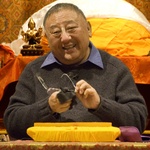
Gelek Rimpoche

Gelek Rimpoche

Founder, Jewel Heart, Tibetan Buddhist Center

Born in Lhasa, Tibet in 1939, Kyabje Gelek Rimpoche was recognized as an incarnate lama at the age of four. Among the last generation of lamas educated in Drepung Monastery before the Communist Chinese invasion of Tibet, Gelek Rimpoche was forced to flee to India in 1959. He later edited and printed over 170 volumes of rare Tibetan manuscripts that would have otherwise been lost to humanity. He was director of Tibet House in Delhi, India and a radio host at All India Radio. He conducted over 1000 interviews in compiling an oral history of the fall of Tibet.

Born in Lhasa, Tibet in 1939, Kyabje Gelek Rimpoche was recognized as an incarnate lama at the age of four. Among the last generation of lamas educated in Drepung Monastery before the Communist Chinese invasion of Tibet, Gelek Rimpoche was forced to flee to India in 1959. He later edited and printed over 170 volumes of rare Tibetan manuscripts that would have otherwise been lost to humanity. He was director of Tibet House in Delhi, India and a radio host at All India Radio. He conducted over 1000 interviews in compiling an oral history of the fall of Tibet.

In the late 1970's Rimpoche was directed to teach Western students by his teachers, the Senior and Junior Masters to His Holiness the Dalai Lama. Since that time he has taught Buddhist practitioners around the world. In 1988, Rinpoche founded Jewel Heart, a Tibetan Buddhist Center. His Collected Works now include over 32 transcripts of his teachings, numerous articles, as well as the national bestseller Good Life, Good Death (Riverhead Books, 2001) and the Tara Box: Rituals for Protection and Healing from the Female Buddha (New World Library, 2004).

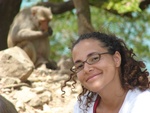
Laurie Santos, Ph.D.

Laurie Santos, Ph.D.

Associate Professor of Psychology, Yale University

Laurie Santos is an associate professor of psychology at Yale University and the director of Yale University’s Comparative Cognition Laboratory. Laurie received her B.A. in Psychology and Biology from Harvard University and her PhD in Psychology from Harvard.

Laurie Santos is an associate professor of psychology at Yale University and the director of Yale University’s Comparative Cognition Laboratory. She received her B.A. in Psychology and Biology from Harvard University and her Ph.D. in Psychology from Harvard.

Her research explores the evolutionary origins of human cognition by studying the cognitive capacities present in non-human primates. She has investigated a number of topics in comparative cognition, including primates’ understanding of others’ minds, the origins of irrational decision-making, and the evolution of prosocial behavior.

Her scientific research has been featured in The New York Times, The Los Angeles Times, The Economist, Forbes, The New Yorker, New Scientist, Smithsonian, and Discover.

She has also won numerous awards, both for her scientific achievements and for her teaching and mentorship. She is the recipient of Harvard University’s George W. Goethals Award for Teaching Excellence, Yale University’s Arthur Greer Memorial Prize for Outstanding Junior Faculty, and the Stanton Prize from the Society for Philosophy and Psychology for outstanding contributions to interdisciplinary research. She was recently voted one of Popular Science Magazine’s “Brilliant 10” Young Minds.

Tiffany Shlain

Tiffany Shlain

Filmmaker

Honored by Newsweek as one of the "Women Shaping the 21st Century," Tiffany Shlain is a filmmaker, founder of the Webby Awards, and cofounder of the International Academy of Digital Arts & Sciences. A celebrated thinker and catalyst, Tiffany is known for her ability to illuminate complex ideas in culture, science, technology, and life through her unique films, dynamic talks, and projects.

Honored by Newsweek as one of the "Women Shaping the 21st Century," Tiffany Shlain is a filmmaker, founder of the Webby Awards, and cofounder of the International Academy of Digital Arts & Sciences. A celebrated thinker and catalyst, Tiffany is known for her ability to illuminate complex ideas in culture, science, technology, and life through her unique films, dynamic talks, and projects. Her films and work have received 50 awards and distinctions. Her last four films premiered at Sundance, including her new 2011 acclaimed feature documentary, "Connected: An Autoblogography about Love, Death & Technology," which the New York Times hailed as "Examining Everything From the Big Bang to Twitter," and the US State Department just selected it as one of the films to represent American in their 2012 American Film Showcase. She is currently working on a new film series, that includes "A Declaration of Interdependence and her new film "Brain Power" looking at the development of the human brain set for completion this spring. She and her team are customizing these films for free for any non-profit around the world. www.tiffanyshlain.com

Tami Simon

Tami Simon

Founder and Publisher, Sounds True

Tami Simon is the Founder and Publisher of Sounds True, an independent multimedia publishing company based in Boulder, Colorado. Founded in 1985, the company’s mission is to inspire and support personal transformation and spiritual awakening.

Tami Simon is the Founder and Publisher of Sounds True, an independent multimedia publishing company based in Boulder, Colorado. Founded in 1985, the company’s mission is to inspire and support personal transformation and spiritual awakening. Familiar to many as "the voice of Sounds True," Tami conducts in-studio author dialogues and hosts the popular free podcast series "Insights at the Edge". Over the past 26 years, Sounds True has published over 1000 titles in multiple formats including books, spoken-word audios, instructional DVDs, music CDs, interactive learning kits, and online courses. Its collection focuses on personal healing and spiritual transformation, featuring titles by many of the leading spiritual teachers, authors, and visionary thinkers of our time. In addition to her work at Sounds True, Tami is also a senior meditation teacher under the guidance of Dr. Reginald A. Ray, the founder and spiritual director of Dharma Ocean, an organization dedicated to embodying and unfolding the practicing lineage of the great Tibetan meditation master Chogyam Trungpa Rinpoche.